


What is SEO? #
SEO (Search Engine Optimization) stands for search engine optimization. This refers to all measures that help ensure your website is easier to find on Google and other search engines—in other words, that it appears higher in the search results for relevant search terms.
This includes technical fundamentals (such as fast loading times and a clean page structure), as well as content such as headings, text, and images—and meta information such as page titles and descriptions.
Good SEO settings ensure that search engines can correctly understand, categorize, and display your pages. The goal isn’t just to attract more visitors, but above all to attract the right visitors: people who are actually looking for what you have to offer.
What features does ChurchTools offer? #
Metadata #
You can set a custom meta title, meta description, and social media image as a preview image for each page. When content is automatically synced, we already provide appropriate default values for these fields. In addition, general information about your website is automatically used to help ensure the best possible display in search results. You can find more information on this in the SEO section of “How to create and edit a page? ”
Standardized Data (Schema.org) #
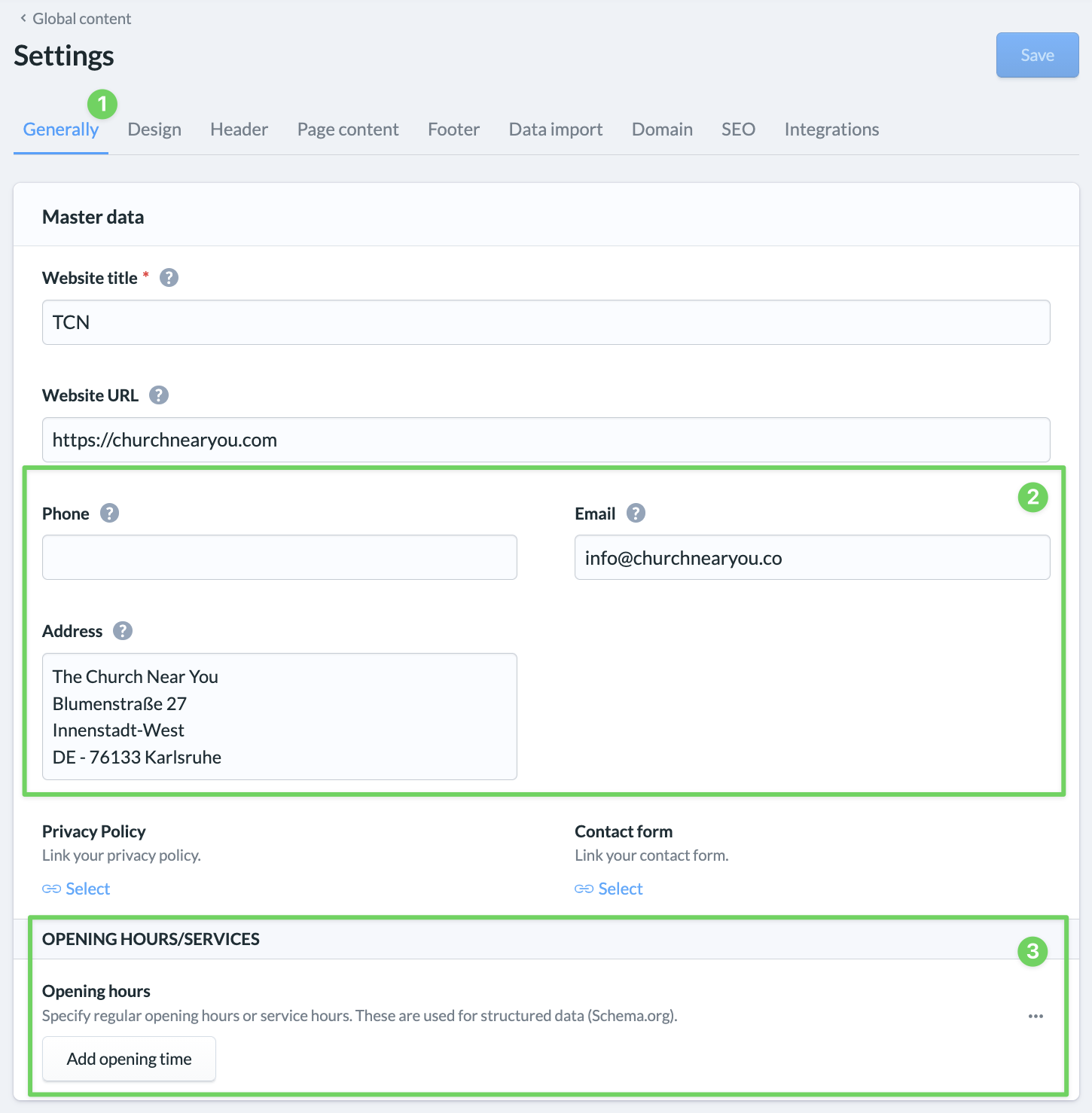
Your website provides important information such as name, address, and contact details (2) in a recognized standard (Schema.org) for organizations and campuses. This often allows search engines to parse the data more effectively and display it attractively in search results.
You can also enter your congregation’s worship service times (3) as business hours. They will automatically be tagged so that search engines can recognize them more easily.
Simply update your information in the Settings under General (1), and it will be transmitted by your ChurchTools Website in the correct format.
SEO Reports #
SEO reports allow you to quickly generate a report on the status of your website. You can also enter verification codes for Bing and Google in your website’s settings to access important reports from each search engine. For more information, see SEO (Search Engine Optimization).